Art to Self | The Craftsmanship of Self
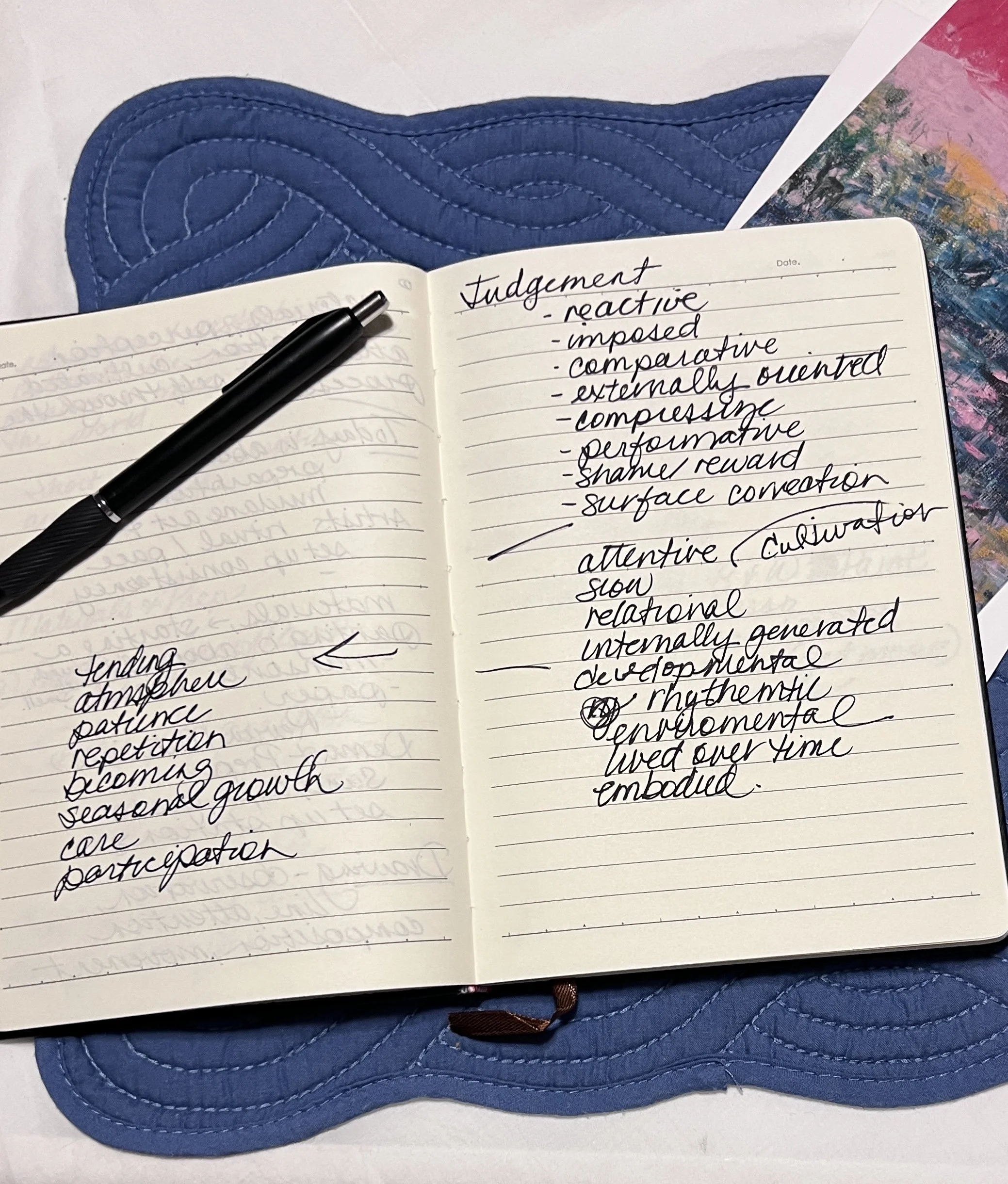
Art to Self approaches creativity as a cultivated relationship.
Influenced in part by Pierre Bourdieu’s concept of habitus, the atelier explores how environments, repetition, perception, rhythm, aesthetics, and lived experiences become written into the body over time.
The way we create is shaped by the way we observe, move, attend, respond, and relate to the world around us.
Creativity here is approached not as talent, but as an evolving relationship to perception, process, material, and self.
Surfaces
Masonite boards
Mixed media paper / watercolor paper
Canvas (future classes)
Preparation
Sandpaper (120/220)
Gesso
Painter’s tape
Water containers
Paper towels / shop towels
Painting
Acrylic paint
Matte medium
Gel medium
Palette knives
Brushes
Mixing palettes
Studio Materials
Mason jars or equivalent containers
Lentils, rice, or weighted fill material for brush storage
Water containers
Paper towels / shop towels
Spray bottles
Rags / cleanup cloths
Brushes
Flat brushes
Round brushes
Detail brushes
Large gestural brushes
Material Sources
Dick Blick/ Jerry’s Art — paint, brushes, gesso, palette knives, surfaces
Lowe’s / Home Depot — masonite boards, sandpaper, utility materials
Amazon — jars, storage, supplemental tools, organizational materials
Michaels / Joann — basic supplies and sketch materials
Local thrift / salvage / found materials — texture, experimentation, unconventional surfaces
Studio Practice
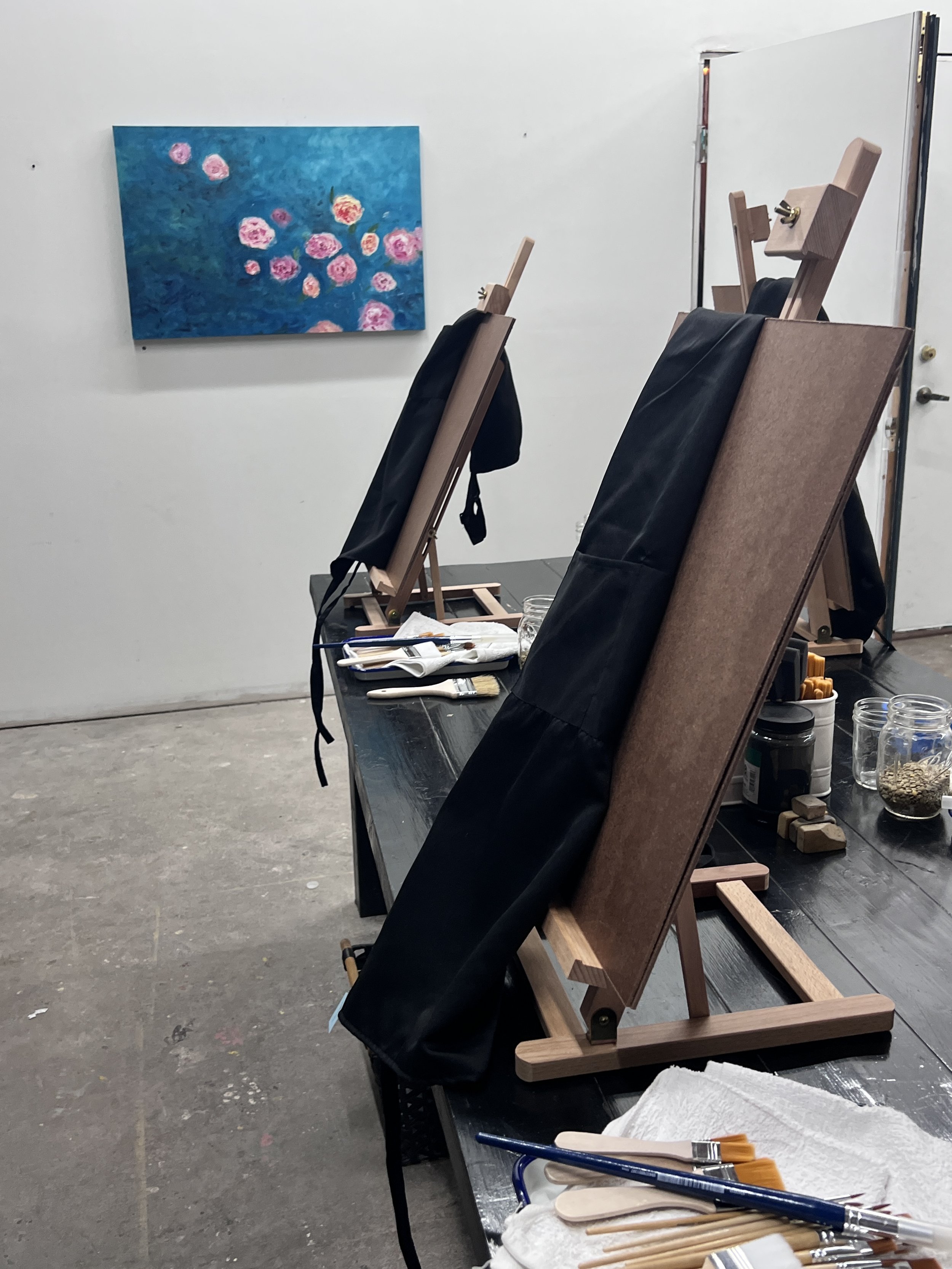
A painting station should support both movement and attention.
Consider separating:
clean areas
wet areas
tools
Easel or Table Height
drawing space
paint mixing space
drying surfaces
Artists often develop personal rhythms and environments that support the way they think, move, and create.
Your station can become an extension of your process: organized, minimal, sensory, layered, quiet, energetic
Part of creative practice is learning what allows you to remain both responsive and immersed in the work.
Pair that with the ritual of HOW you setup to start painting allows you to tap into your creativity.
Preparation
Prepare Surface
Paper surface: tape watercolor or mixed media paper securely to masonite board on all four sides
Lightly sand using 120–160 grit sandpaper in circular motions
Slightly soften edges and corners to reduce brush wear
Clean Surface
Remove all dust and debris before applying gesso. A dry cloth, soft brush, or slightly damp paper towel may be used.
Apply Gesso
Using a larger brush, apply thin coats of gesso in cross-directional or X-pattern strokes to create an even but responsive surface.
Allow to Dry
Allow surface to dry completely between coats. (A hairdryer may be used.)
Sand Surface
Using 220 grit sandpaper, lightly sand the surface depending on the desired balance of smoothness, tooth, absorbency, and paint response.
Repeat Process
Repeat gesso and sanding process approximately 2–3 times. Multiple thin coats generally create a stronger and more versatile painting surface than one heavy coat.
Final Surface
The final prepared surface will influence:
gesture
drag
absorbency
layering
brush response
texture
detail
Field Notes
Sanding creates “tooth” for adhesion
Dust removal matters more than people think
Multiple thin coats are preferred over one thick coat
The desired smoothness changes paint response
Hardboard/masonite is absorbent, so multiple coats matter
Edges should be lightly sanded so they don’t damage brushes